Slide Away: what's the difference between 'speaking' and 'presenting'?
Make it stand out
Think about some of the most important conversations we have in life.
‘Mum, Dad: I’m gay’
‘I love you. I think we should move in together’
‘Your drinking is getting out of control. I think you have a problem.’
‘Your dad and I are getting a divorce’
Or think of the biggest, most important things you've ever been called about to speak about, in your own life.
What I want to know is this:
What PowerPoint slides did you use???
Was it like this:
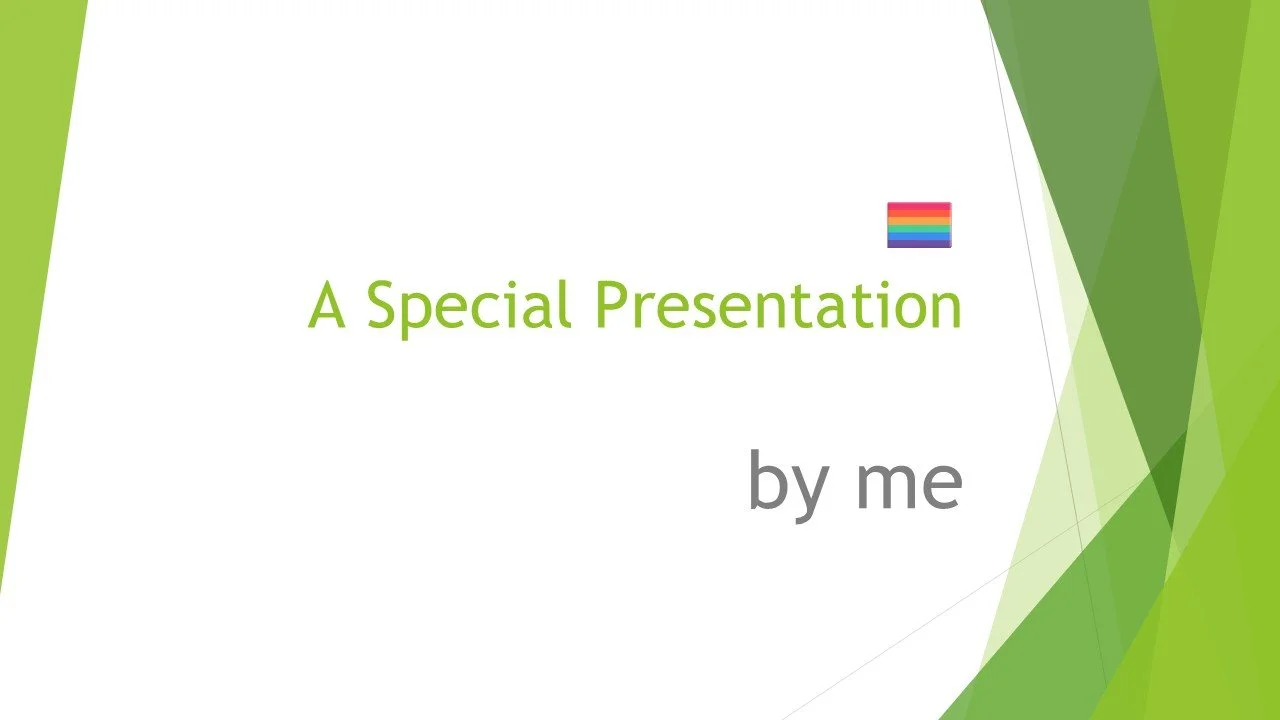
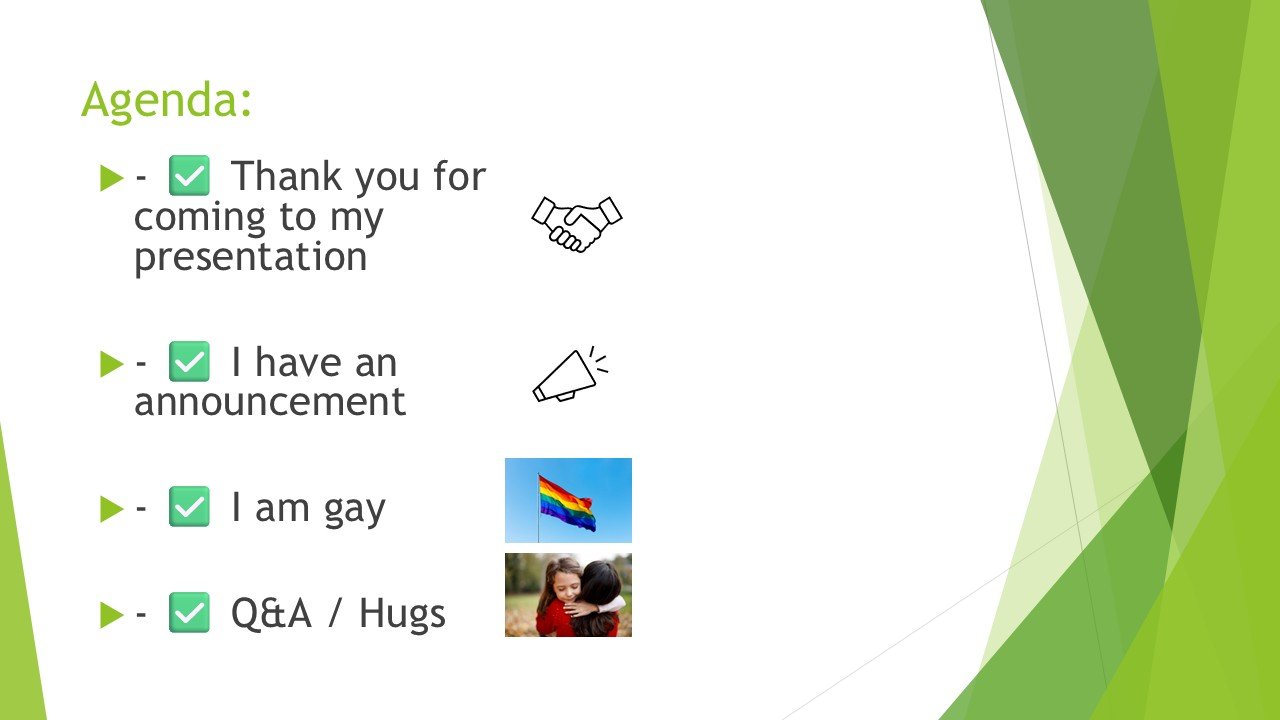
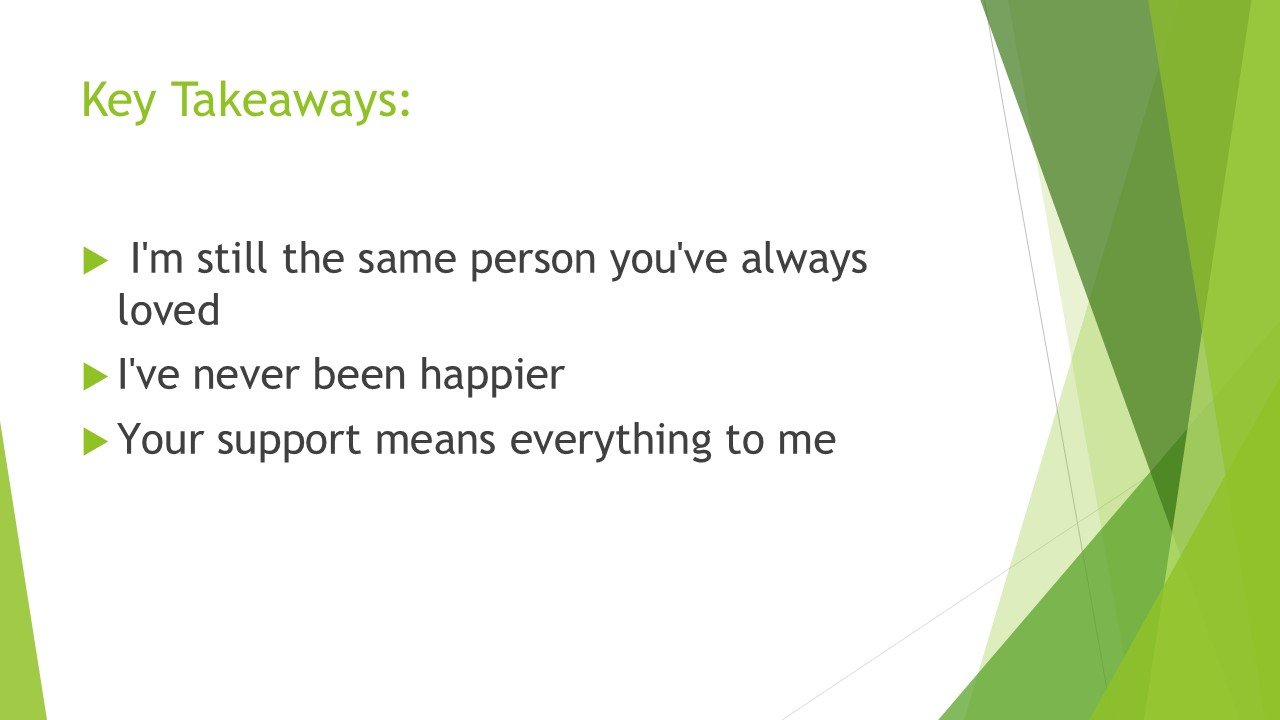
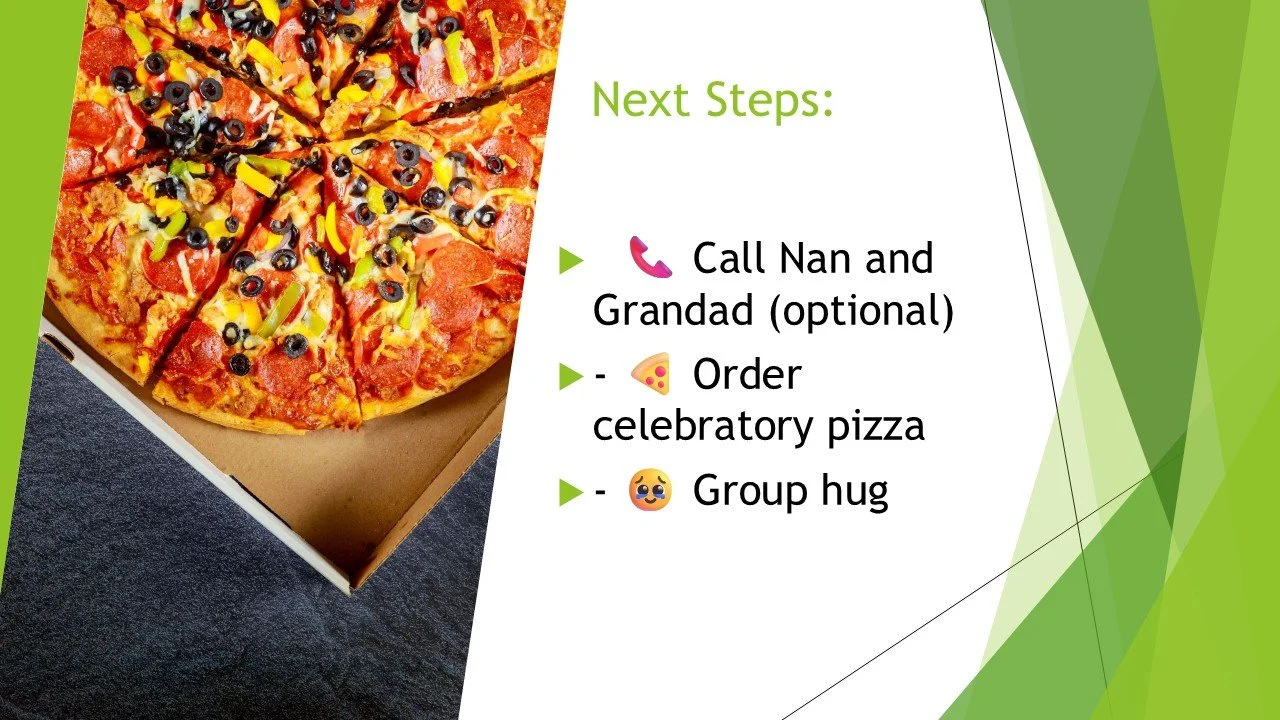
Ok, so maybe this approach would work for some people - it's cute, right?
But unless we're trying to inject some humour into the moment, we generally don't use PowerPoint for communicating about the big issues in life.
We sit down with people, face to face, and speak.
So why don't we do that with other big issues - in our professional lives? With clients, customers, and stakeholders?
In those situations, we don't speak; we 'present'.
What is the difference between speaking and presenting?
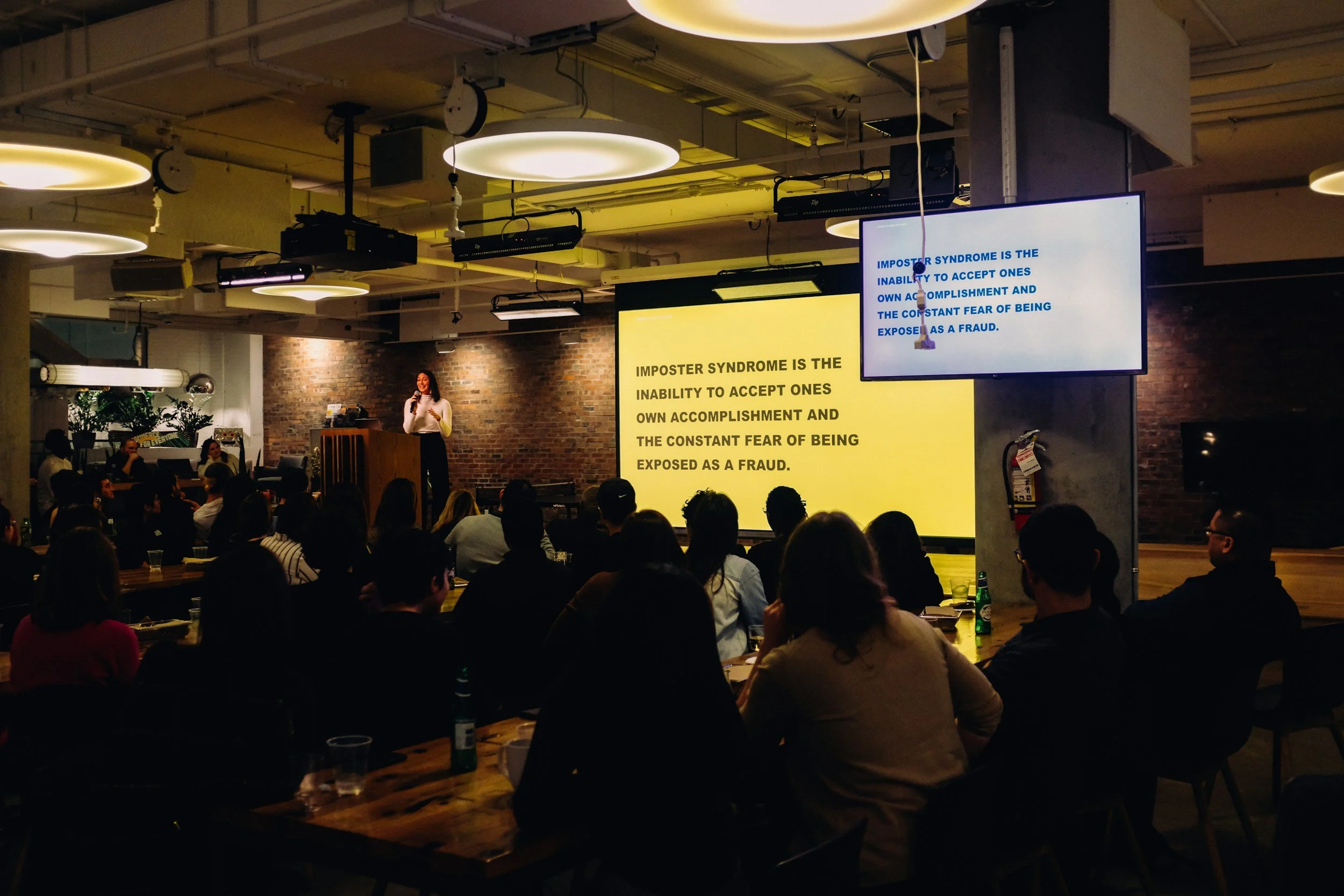
Business presentations: who’s looking at the words on the screen? Everyone. Who’s listening to the presenter read out those words? No-one
After coaching hundreds of professionals over more than twelve years, I've noticed that almost everyone treats giving a presentation as something which isn't really about speaking, as such.
It's all about SHOWING POWERPOINT SLIDES.
Maybe it's that word 'presentation'.
'I have to have something to 'present': ta-da! Look at this'.
’Without something to look at, it's not really giving a presentation, is it? It's just… me, talking’.
YES. And what's wrong with that?
Why presenters become dependent on slides
Sometimes there are practical, cultural reasons for a slide deck.
I have a client who works for a big corporation. We've been focusing on how to make her business presentations more effective.
Even if she's giving a brief update to managers on a conference call, there are always PowerPoint slides: lots of text, lots of tables and grids, very few pictures.
She says,
'in our corporate culture there's an expectation that there will be slides. Some people may not have time to join the call, so they'll need me to send them the slides to read in their own time and catch up… but also, there's an unspoken understanding that preparing slides shows that you've put the work in… turning up and just talking, without slides, would feel like I hadn't prepared, and I was just winging it. It would seem unprofessional'.
So there are compelling reasons for her to includes slides.
Why is there an EXPECTATION that slides = professionalism? That slides mean you've 'done the work.'
Why wouldn't we get a sense of the professionalism, dedication and knowledge from the unmediated, speaking human being in front of us?
Why do we feel safer if we have some fairly dull bullet points to read?
(Speaking of which, here are some ‘bullet points’ designed to get you to spend longer on my excellent website:')
RELATED ARTICLES
Letting the slides do the talking?
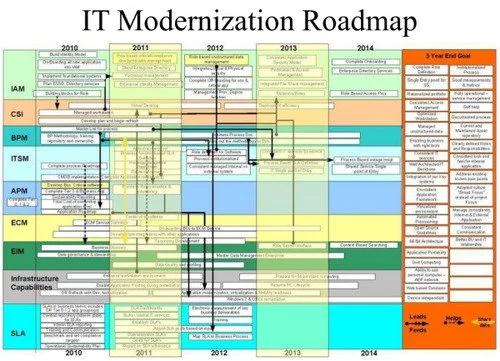
Bad slides: not one of my client’s slides! But lot of work has been done here. That is perhaps the point; it’s meant to look complicated!
I have another client, who was recently preparing for a big job interview.
The first round consisted of… yep, a presentation.
He sweated for WEEKS over his PowerPoint deck. And my word, was there a lot on his slides.
Graphs, flowcharts, stock images, REAMS of densely packed text.
And like with most presentations, the speaking he did was mainly to explain what was on the slides.
Mostly, he just READ ALOUD the text that was on the slides.
Like with my other client, I think on some level there was an expectation that there would be slides, so he created some.
But the slides became the main event. I kept trying to bring his focus to the act of speaking - to how he SOUNDED when he was talking.
If I said that he needed to pause more, he'd say, 'yeah I think I need to spend longer on this slide'.
If I said he needed to highlight a key point by using extra vocal energy, he'd say, 'yeah, actually I probably need another slide here to explain that…'
He talked about ‘storytelling’ a lot, but he didn’t see himself as a storyteller… more like the author of a storybook.
Look, it was a good slide deck - and I helped to make it better!
Then the second round of the interview process was a Q&A from a panel of interviewers. 'No slides', as he told me, nervously.
This part of the interview process was ALL about the person talking. No visual aids, no gimmicks, no media.
The reason they had two formats within the interview is the at the heart of the difference between speaking and presenting.
Slide decks are relatively easy to create (most of you are probably using AI to design yours, right?)
So if I was interviewing for a high-stakes managerial/director role, I'd want to know:
‘can this person really deliver? when there's no slides to hide behind?’
When it's just him or her… talking?
Why do we feel that asking people to just listen - to the words coming out of our mouths - is not enough?
I was discussing this very topic with another client, who has a background in psychology and neuroscience.
She was talking about how the kind of media we are exposed to literally changes the structure of our brains. Young people who have been raised on a diet of short-form video on YouTube and Instagram tend to struggle with long-form video, or less stimulating media like standard text - words on a page.
Traditional books are hard work if you're used to TikTok.
In a similar way, it's as if professional people have come to expect more from a ‘presentation’ than a human being, speaking.
'Just talking' not exciting enough; where's the additional media?? Where are the bullet points?
Or maybe it's us - the speakers. Maybe we don’t trust our speaking to be 'interesting' enough.
Visuals become an 'insurance policy' against the audience not getting it.
So if we’re talking about brains, we feel we have to show a picture of some grey matter.
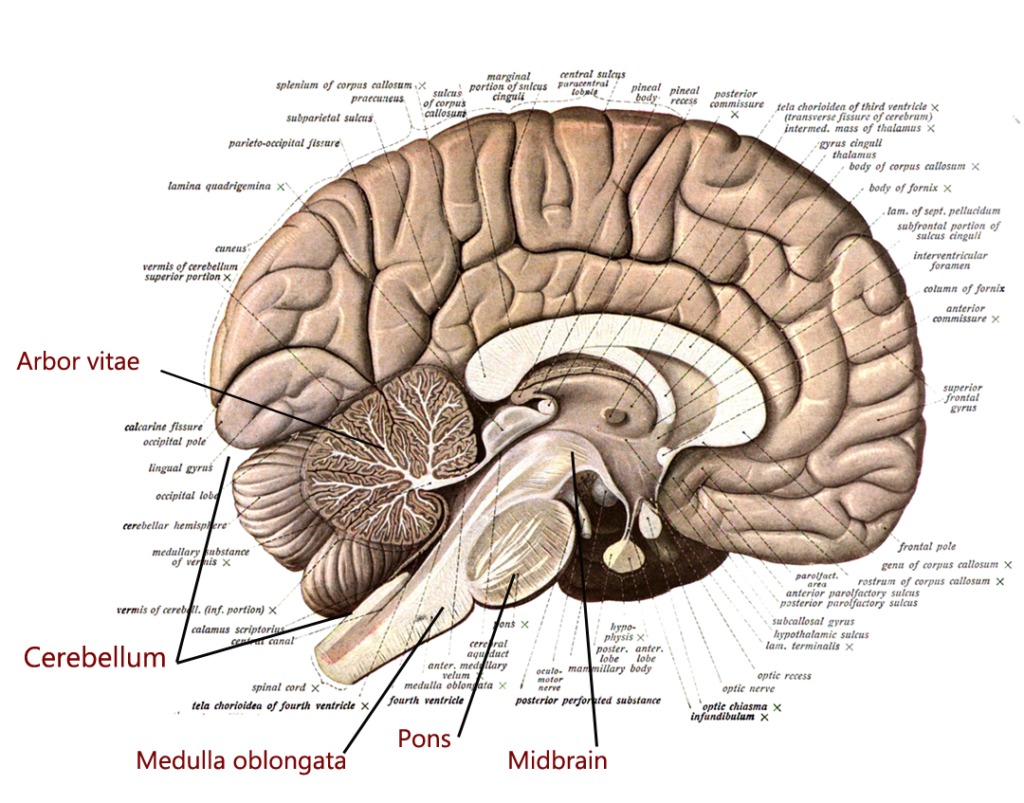
Brain: this is a brain. Now you know what I’m talking about when I say ‘brain’
If we’re talking about trust, we need to have a screen behind us showing a picture of an adult and a child holding hands.
Stock image: a picture of holding hands, for when just saying the word ‘trust’ is not enough. Lazy-slide-design gold!
If we’re talking about 'transformation' - which is probably an exciting experience, an invigorating thing to talk about… does it really add anything to the experience of listening to a human being saying the word 'transformation', to show a slide, with the word ‘TRANSFORMATION’ on it??

Words on a screen: so powerful. Much more than words out loud
Your audience came to hear you—not your PowerPoint slides
Text, and graphs, and pictures, and MEDIA in general seem to have become our comfort zone.
Think about when you've been a listener; at work, travelling, at home; whether it’s a meeting, a podcast to pass the time, or partner, parent or child, telling you about their day.
Do you ever just listen? Or do you have to be looking at something, watching something, reading something at the same time?
We don’t trust ourselves to just speak, because we know, don't we, that we don't know how to just listen. So we don't trust our listeners to just listen.
Back to the important question: why?
Why don't we just listen?
Because listening feels like work.
And listening feels like work, because most speakers don’t realise how hard they need to work.
They don't do all things listeners need them to do to make it easy.
They don't pause enough, so listeners can't keep up.
They don't speak with energy, so listeners have use more energy, more concentration, to fill the gap (see last blogpost on the reciprocity gap).
And speakers often don't do the work because… the slides are there to do the work!
In the presenter's mind, they show up a slide they spent most of their weekend fine-tuning and tinkering with, and think, 'there. There's the work I've done. It's up there for all to see. That's been communicated now - my job is done. Hmm, maybe I can help it a bit, by reading those words out loud… hmm, but they've probably already read it - I have! So I'll just read it out quickly, and move on…'

Speaking and presenting: reading aloud to grownups
This is 'death by powerpoint'. Not poor presentation design, with unreadable slides full of gibberish; it's presenters, who speak like the slides are there to do all the talking, that kill presentations.
I say this to so many clients, I'm almost getting bored of it: 'they're called 'visual AIDS' for a reason'.
The slides are supposed to 'aid' you to make your points.
But most people present with slides as though the presenters is there to 'aid' the slides.
Let's bring the focus back to YOU: the human being, who knows what she's talking about… they need to LISTEN to you talking about it.
Think back to the joke I made at the beginning of this article, about using PowerPoint to come out to your parents: why don't we use slide decks in our personal lives, for important 'presentations' of news or ideas?
I think the reason we don’t is that in these moments, we want the immediate, emotional directness and CONNECTION that we get from speaking, and being listened to.
The words, and the feelings that fuel those words, are what matters.
We want our listener to be in sync with us. Not distracted or distanced in any way.
‘Speaking and listening are not independent processes’
Brains: we are actually talking about these things in this picture now
My psychologist-scientist client, who I mentioned earlier, told me in passing about some studies that have shown that 'speaking and listening are not independent processes'. Click here to read more about this research conducted by scientists at Princeton University.
The study found evidence that 'the speaker's [brain] activity is spatially and temporally coupled with the listener's activity.'
I’m of course fascinated by this idea (I'm going to write more about it in a future post), because it’s another way of stating what is at the heart of everything I do with speakers: trying to get what’s inside the speaker’s head, into the listener’s head.
What this observation about speaker-listener cognition means is that when we speak, the transfer, the communication of ideas, happens in real time!
Effective communication through speech is literally a meeting of minds!
That is what is so vital about speaking. That’s why it’s the most valued method for communicating things that matter.
And yet.
In a professional context, we behave as though words are not enough.
We don’t trust that our own VALUE for the subject, and our VALUE for the listener and our relationship with the listener, will be powerful enough; ‘maybe a picture or some bullet points will increase the cognitive ‘oomph’ that I want my communication to have’.
My question is: why is there a difference between speaking and presenting? Why can’t we approach giving a presentation with something like the intimate, personal spirit of direct connection, that we have when we sit down with the people we love, and just… speak?
It's that simple; it's that difficult. If you like the sound of this approach to presenting, but you want some practical help to achieve it, message me and book a free 1hr taster session.



Practical advice for giving better presentations with PowerPoint
How to become a better speaker without relying on PowerPoint slides
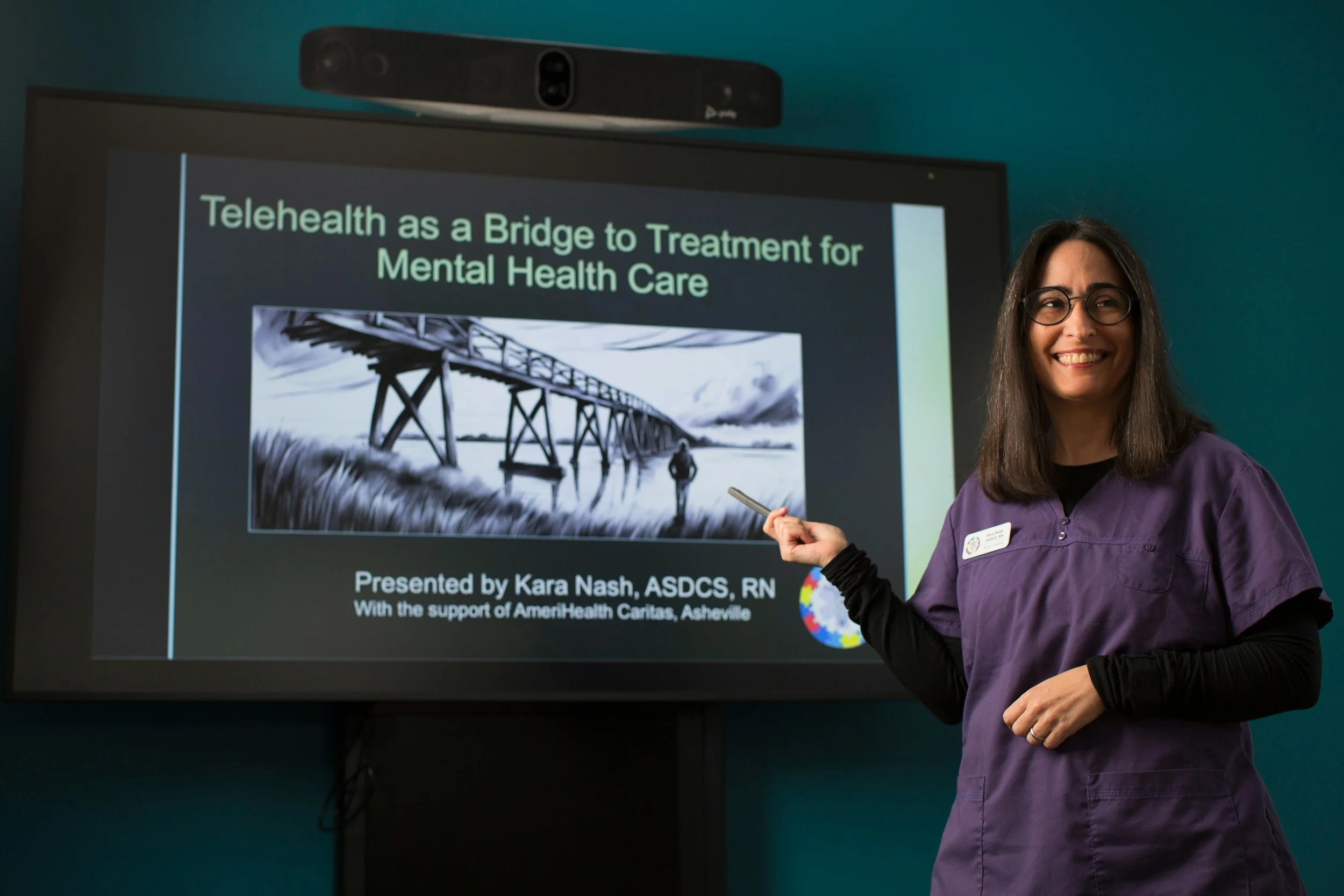
Presentation with slides: look how embarrassed Ms Nash is about using a picture of an actual bridge to explain what a metaphorical ‘bridge’ means
Speaking first, slides second
Tip #1: Speak-then-click, not click-then-speak
Here's a tip about the timing of revealing slides during talks: I suggest speaking about a point, and THEN showing the slide to illustrate it, rather than what most presenters do, which is to show the slide first, and then talk about what's on it.
If you click-then-speak, and give the audience something to read, they will read it. Immediately. Faster than you can read it out.
Speak-then-click keeps the listener focused on you and not the visuals, and avoids having listeners read ahead of you, and then getting bored while you read them text that they've already read.
So with the previous slide still on the screen, look at your notes for the NEXT slide (they should be separate from the slides themselves! DON'T use the slide as your speaking notes), move on and talk about what the next slide covers… and THEN… show that slide.
Tip #2: read the whole slide, twice
If you’re going to make people look at a slide, and read – let them read!
Presenters will show a text-heavy slide and then immediately start talking. So the listener is being asked to read AND listen.
Manage the audience’s attention for them: if they’re reading, let them read. If you want them to listen, wait til they’re finished reading and don’t double the cognitive load that you’re asking them to bear.
Show the new slide. Silently read everything on it. Now read it all again, silently, in your head.
By the time you've read it twice, your audience will have read it once.
Or… if that feels like it will mean lots of long awkward silences - don’t make them read.
Try bringing the focus to you, by reducing reliance on visual aids – especially anything involving text.
They are just an insurance policy, against people not listening. Do the work for them, and listeners will listen.
If you feel strongly that you want to put text on a slide, ask yourself: why?
Could I make this point effectively, WITHOUT having it written up there?
If you want to experiment with this approach to public speaking and public speaking training, message me and let's try a few things out in my free 1hr taster session.
Frequently Asked Questions
Is presenting the same as public speaking?
Not necessarily. For most of us, ‘giving a presentation’, as I discuss in the article above, usually involves something visual: often PowerPoint slides, maybe other visuals like 3D models, or videos, or flipcharts. Our understanding of ‘public speaking’ is something looser, like giving a wedding speech, being on a discussion panel at a conference, or even ‘saying a few words’ at a work colleague’s leaving party. But it’s always a situation that involves just you speaking, and everyone else - whether it’s six or seven people, or a crowd of hundreds - looking at and listening to just you.
I think this is why most people’s ‘presentations’ fixate heavily on the slide deck; to ‘present’ you have to have something for people to look at. Listening almost doesn’t matter.
But most of the time, when people talk about ‘giving a presentation’, what they really mean is nothing more complicated than speaking, to more than one or two people. Maybe that’s why there are so many bad PowerPoint slide decks. Most of the visual ‘aids’ we use aren’t necessary, if we can get our listeners to really listen.
Can you give a presentation without PowerPoint?
100% yes! Unless you have information to share that is extremely technical, or lends itself to something visual, then I would strongly suggest you consider not using PowerPoint slides AT ALL (except if there is a cultural or practical necessity to include slides - see above)
Do presentation skills improve public speaking?
I use these phrases ‘presentation skills’ and ‘presentation skills training’ not because I see my work as that, but mainly because that’s what nice people like you search for on Google or ChatGPT!
Anyway - yes: honing your ‘presentation skills’ by understanding that a presentation should be more about speaking and bringing the listener’s focus to YOU, the speaker, and not to some text and generic stock photos on a screen, will only enhance your ability and confidence to do ‘public speaking’ of the kind mentioned above, where there is no slide deck to hide behind. I encourage clients to see giving a presentation as essentially no different to speaking, slides or no slides.
Why do presenters rely too much on slides?
For the same reason most modern people prefer writing to speakling; they feel more in control. Slides are less immediate, less scary, less REAL than words coming out of your mouth; it’s less nerve-wracking to have a roomful of eyes looking up at a screen, than all looking right at YOU.
I talk in the article about slides as an ‘insurance policy’ against people not really listening. If you lack confidence in your public speaking, so you worry people won’t get it, it doesn’t matter - everything you’re saying is up there on the slide for people to read!
Presenters also rely too much on slides when they don’t know the material well enough, and they haven’t had time to understand really thoroughly what they want to say. They worry they’ll forget something. So they use the slide deck as their speaker’s notes. No need to worry you’ll forget anything - it’s all written up there! So all you have to do is read out what’s on each slide.
Reading aloud to people who know how to read makes most presenters feel silly. This is one of the reasons why giving, and hearing, presentations is something that hardly anyone looks forward to. It feels awkward and silly and pointless for the speaker, and then it starts to feel that way to the listeners. And where has the sense of VALUE gone?
If you take nothing else from this article, take this advice: if you’re giving a presentation, don’t use the slide deck as your speaker notes. This is what ‘speaker view’ in PowerPoint is for!! Put your notes or script in the speaker notes section, and put as little as possible on the slide, especially not text.