I Hate Voicenotes: Why Voicenotes Are Annoying (Even to Me) and How to Send Better Voicenotes
Why We Prefer Reading to Listening, and How to Make Listening Easier

Voicenotes: ‘I’ll just drop her a quick voicenote’… turns into a six-minute ramble
You're reading this. Not listening to it.
Which is a bit strange, given that I spend my working life inviting people to think about how good speaking is more powerful than writing — that a voice can communicate so much more than a page of text ever will.
So why did I write this instead of recording it?
Because even I know: if you're browsing the web looking for help with accent reduction classes or public speaking skills coaching, you probably don't want to look for it in a nine-minute voicenote.
(If you do want to hear what I sound like, here's my YouTube channel).
'Voice message (5:24)’
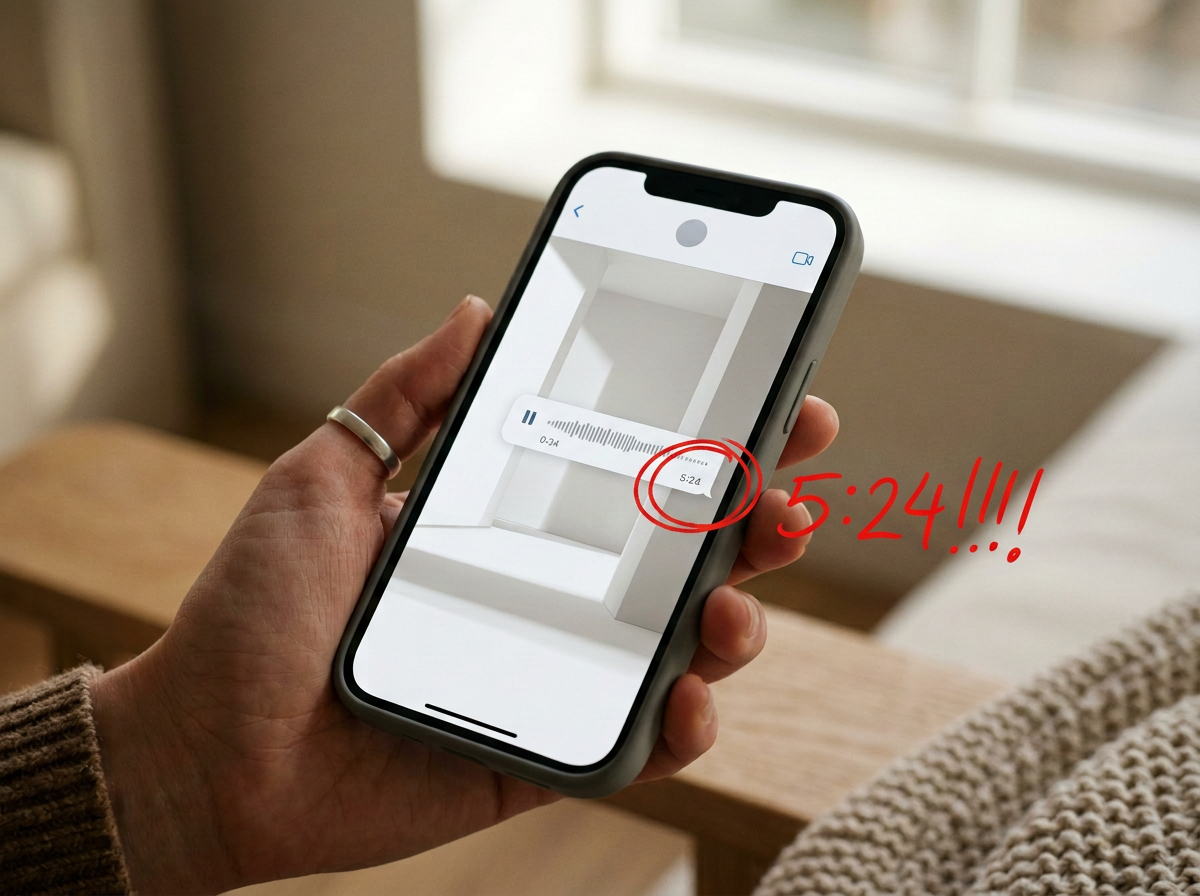
First World Problems?: AI image of a white person in a comfy beige house getting peeved about long voicenotes
You know the feeling. The little bar of sound waves appears. A number ticks up next to it like a countdown to a chore. You don't open it. You let it sit there, silently judging you, for the rest of the afternoon.
A text - even a very long text - never does this to us, but a voicenote does.
Why Are Voice Notes So Annoying?
As a reader, you have more control than you do as a listener.
A text message can be skim read, or read again, or just glanced at, and you can get what you need in a few seconds. Or you can read it more fully, and properly take it in, which takes a few more seconds. Then you move on with your life.
A voicenote can feel like hard work because you have less control; you are at the mercy of the speaker.
Say it demands three and a half minutes of your attention; you could probably read this whole article in that time (and even my most verbose friends don't write 1000-word text messages!)
Reader's Digest put its finger on exactly this in a recent piece on voice-memo etiquette: 'the format is asynchronous, but the demand it makes on you is entirely synchronous'. It only really works if you stop what you're doing and give it your full, real-time attention — which is a strange trick for something that claims to be more 'convenient' than a text. A Preply survey cited in the same piece found that around three in ten Americans find voicenotes outright annoying or inconvenient. So it's not just you.
And — worse — you usually can't safely listen to it in public without looking like you're either taking a call from MI6 or having a very intense argument with yourself.
Similar thoughts were aired by a Guardian columnist writing, with some feeling, about her horror at friends turning out voicenotes that are 'unsolicited mini-podcasts' nobody asked to subscribe to. Fair point, well made. The difference, I'd argue, is consent: you chose to open this. Nobody chooses a surprise voicenote at 8:47pm that turns out to be a stream-of-consciousness brain dump.
Voice Note Etiquette: Things that Senders Get Wrong
What we’re reacting against when we find voicenotes annoying is not just that they tend to be long. Maybe your friend has a lot to say!
It's that it's very rare to find people who speak really well when it comes to the low-key task of leaving a friend a message.
Think about when you've been the sender of a voicenote.
Recording a voicenote is awkward, isn't it.
You're performing a monologue to a small silent rectangle, with nobody nodding back, no 'mm-hmm's to guide you, no face to read. So you ramble. You go off on tangents. You double back. You say 'ANYWAY, what was I saying? Oh yeah…' three or four times.
Then you send three and a half minutes of unedited thinking-out-loud. Your listener has to sit through your first draft.
A text gets edited before it's sent. (On WhatsApp, you can edit a text AFTER it's sent, like I do, to correct all the typos).
A voicenote gets composed live, badly, and edited, badly, in real time. And the person listening has to wait patiently for you to get to the point.
People who like leaving voicenotes do so because voicenotes feel like less work than texting.
But people who don't like receiving voicenotes don't like them because they feel like MORE work.
It's not the same kind of communication as having an actual real-time chat.
MIT sociologist Sherry Turkle made a version of this point to the New York Times when it looked into why the format divides people so sharply: she argues that leaning on voice notes instead of real conversation lets us dodge the harder, more exposing work of actually talking to one another — the pauses, the back-and-forth, the risk of being misunderstood in the moment. A voicenote, in other words, lets you have the appearance of intimacy while dodging most of the attentiveness - and vulnerability - that real conversation demands.
The issue with voicenotes is when the people who leave them don’t do the listeners' work — don't find a pace that suits this particular listener, don't use vocal energy and emphasis in a way that draws out meaning, and don't read the signals that listeners give us that let us adjust to suit them.
Which, funnily enough, is exactly the same set of considerations that speakers need to make when speaking in a meeting, in a presentation, or a face-to-face conversation. Whenever you're speaking, you need to make the listener do as little 'work' as possible.
If AI Said it, and AI Listened To It, Has Communication Happened at All?
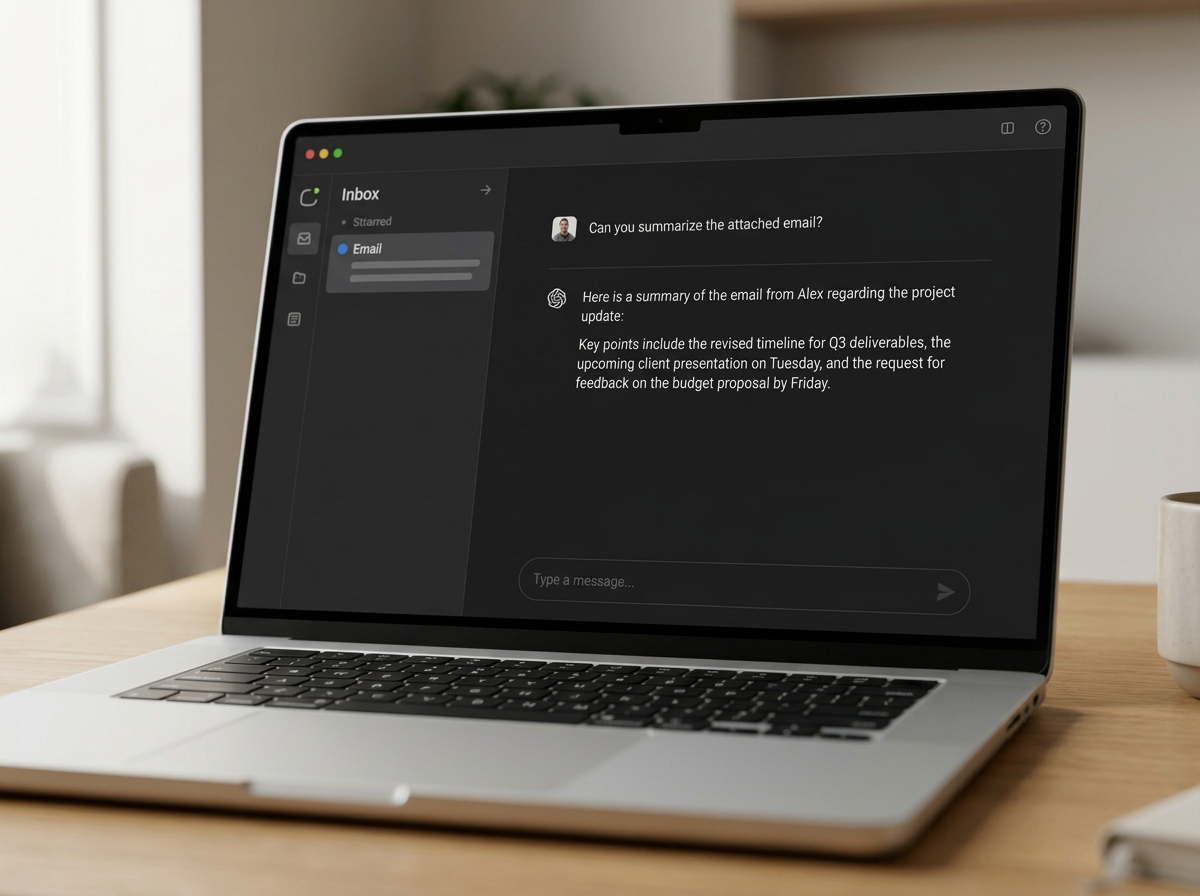
AI reading and writing: bots talking to other bots
These issues don't solely apply to voice, though: text isn't inherently clear and concise either. How often do you get unnecessarily long rambling emails that you don't want to read?
Especially since people started using AI to make their writing more 'eloquent'.
Of course, you the 'reader' can dodge this synthetic verbosity by using AI to summarise long emails… but is that communicating?
(There's a great column here from Tim O'Brien on Medium, 'No One Wrote It. No One Read It', about how 'if a message is generated by AI and summarized by AI, did communication happen at all?')
And as per the Reader's Digest article referenced earlier, you can use AI tools to transcribe voicenotes, summarise them, and have the text-to-speech function speak them back to you in a shorter format, in a synthetic voice that cuts out the um's and er's.
It all feels pretty dead though, doesn't it? It's a long way from having an actual conversation.
Put aside all the AI tools, even the more simple digital workarounds to real communication, like text, email, and voicenotes. Lets focus on human beings, speaking out loud, in the presence of a listener.
Speaking well — on a call, in a meeting, a presentation, in a voicenote, anywhere — is about doing the listener's work for them. When listening is easy, the sense of VALUE comes through; you sound like you have something valuable to say, and the listener feels valued because you've made it easy for them.
Using Voicenotes in my Work as a Public Speaking and Accent Reduction Coach
A confession: I send a lot of voicenotes. Mainly because they work well for the kind of coaching I do. And because my clients are paying me.
An important feature of my accent reduction coaching, and more general public speaking coaching, is encouraging clients to keep in touch with me between face-to-face sessions by sending voicenotes.
This work is all about the physical act of speaking and trying things out loud - not silently thinking 'oh yeah must try that the next time I have a big meeting' and then never getting any practice.
So part of my coaching method is that I set exercises or assignments for clients to practise at home, and then at least once between sessions, I ask them to send me a recording of their practice via voicenote.
(I would love to have time to listen to clients' DAILY practice, but there aren't enough hours in the day!)
And then I reply with a voicenote. I give feedback on what I'm hearing from them.
If I have a simple point to make and I'm in a hurry, I might send a quick text.
But I reply with voice because I need them to HEAR what they're doing right, or wrong, when it comes to pronunciation coaching; and because of course, I want to practise what I preach. I make sure to bring all my public speaking skills to bear, even for a quick 30-second reply.
I want them to hear VALUE in what I'm saying, and I want them to FEEL valued. They're my clients. They matter to me. Helping them with their difficulty or discomfort in speaking to others matters to me.
(Plus it's more convenient for the client to send a voicenote at the time of their choosing, and for me to listen to it at a time of my choosing, than to schedule a quick phone call. This is after all the main selling point of voicenotes!)
So it just makes sense to use voicenotes in this work. However you use voicenotes, you can make it make sense - it doesn't have to be annoying!
How to Leave a Better Voicenote: Practical Tips From a Communication Skills Coach
Right. Enough diagnosis. Since I've spent this whole piece discussing bad voicenotes, it seems only fair to tell you how to leave a good one — using the same principles I use with clients even when they're nowhere near a phone, working on speeches, pitches, and meetings, and on having better conversations.
1. Do the listener's work for them. Before you press record, ask yourself the same question I ask everyone I coach: could you explain your point to your grandma? This is the Grandma Test — if you can't sum up what you're trying to say in one plain sentence before you start talking, your listener is about to do the work you should have done yourself. Know your one sentence. Then build the voicenote around it.
2. Give it a shape — a beginning, a middle, and an end. A rambling voicenote puts listeners off. A good voicenote, like a good presentation, is focused: here's what this is about, here's the bit that matters, here's what I need from you. Do the work, make your point, convey value, DONE.
3. Use pauses consciously and deliberately. Silence isn't dead air — it's where the listener actually catches up with you. I've written before about the power of pausing for the listener's benefit, not just your own, and it applies just as much to a voicenote as it does to a big speech. A short, deliberate pause after a point gives it room to land, instead of getting buried under the next three thoughts you haven't organised yet.
4. Mind the reciprocity gap. Before you hit record, think about why you're doing it this way. If it's just to give yourself an easy time, think: is this going to mean the listener has a harder time? How hard can I expect them to work for what I'm sharing here? I've written about the reciprocity gap — the space between the value you're handing someone and the effort you're asking of them in return. An aimless three-minute voicenote about something trivial is a big ask for potentially not much payoff. A much shorter voicenote with focused and genuinely useful info is more likely to close the gap. Know which one you're sending.
5. Sound like yourself, not a performance. Ironically, at the same time, we're not delivering the Gettysburg Address. The solution to awkward voicenotes isn't more polish — it's less. I coach people on finding a 'real' voice rather than a performed one, and a voicenote is one of the few formats where that matters more than accent, more than 'correct' English, more than sounding impressive. Listening to a recording on your phone is a very intimate experience - remember, the sound you make is probably going directly into the listener's ear, through headphones. So don't overdo the energy. That will make it a comfortable experience for a listener.
6. If it takes more than two minutes, write an email - or schedule a meeting. This one's not from me — it's just good manners, according to the etiquette professionals. If your point genuinely can't fit in two minutes, it's not a voicenote anymore. It's a phone call, a meeting, or an email with the details typed out properly. Choosing the right format for the message is, again, doing the listener's work for them — which is the whole game, whatever you're saying and however you're saying it.
If your meetings are running long, your emails are getting skimmed, or you've ever sent someone a voicenote and immediately regretted it — book a free taster session with me and we'll sort it out. We'll have a proper face-to-face chat for 60 minutes. Slogging through 3:42 voice memos is not required.
Thanks for reading — if you'd rather I read this one to you next time, subscribe here and let me know - maybe I'll turn it into a mini-podcast :)
Further reading, for anyone who wants the more po-faced version of this argument: the NYT on why we're all so divided over voicenotes, the Guardian's mini-podcast horror story, Reader's Digest doing the actual maths on how annoying we all find them, and — because even the etiquette establishment has opinions — Debrett's official rules of engagement. Under two minutes, apparently. Somebody tell my clients.