How can I learn to speak as well as I can write?
6 Ways to Learn the Difference between Good Writing and Good Speaking:
(And why confusing the two holds people back)

Writing vs. speaking: when you sit at a screen all day, written words are your comfort zone. What about when you have to speak?
“A transition from an author’s book to his conversation, is too often like an entrance into a large city, after a distant prospect. Remotely, we see nothing but spires of temples and turrets of palaces, and imagine it the residence of splendour, grandeur and magnificence; but, when we have passed the gates, we find it perplexed with narrow passages, disgraced with despicable cottages, embarrassed with obstructions, and clouded with smoke.
”
“I think like a genius, I write like a distinguished author, and I speak like a child”
As the year draws to a close, I'm looking back over all the work I've done with my wonderful clients (my busiest year to date! I must be doing something right) and a strong theme is emerging:
The differences between writing and speaking. Between written English, and spoken English.
Maybe it's something you've thought about?
English spelling vs. English pronunciation
Try this: think of an English word with an ‘a’ sound in it.
Don’t cheat by looking at the words on this page. CLOSE YOUR EYES.
Not sure?
Be honest: when you close your eyes and try and think of a word with ‘a’ in it… are you picturing words written down?
‘Apple’, ‘father’, ‘water’, ‘watch’… they all have a letter ‘a’ in them.
But which ‘a’ sound is it? ‘a’ as in ‘apple’ or ‘a’ as in ‘father’?
Maybe those two ‘a’s sound the same in your accent?
English spelling is a very unreliable guide to English pronunciation, isn’t it!
Here’s the sound I mean (play the recording below):
Does that help? Which words do you know with that sound in them?
If you’re still struggling - and if you’re still trying to picture written words with a letter ‘a’ in them - you’re in good company.
I bet you think about this every time you read a new word, and think, ‘hmm, how do I pronounce that?’
Or when you realise you’ve been pronouncing a word wrong for ages, because you’ve only ever seen it written down.
EXAMPLE: when I was a student, I realised I’d been pronouncing the word ‘awry’ all wrong. I’d been saying it ‘aw-ree’, to rhyme with ‘story’. It’s actually pronounced ‘uh-RYE’ to rhyme with ‘sky’. HOW WAS I SUPPOSED TO KNOW?
To make changes to your pronunciation and acquire something closer to a neutral British English accent, or ‘BBC’ English as I call it, we need to remember that words are SOUNDS that listeners hear with their ears, as well as collections of symbols, that readers only ‘hear’ in their heads.
Why can’t I speak as well as I write?
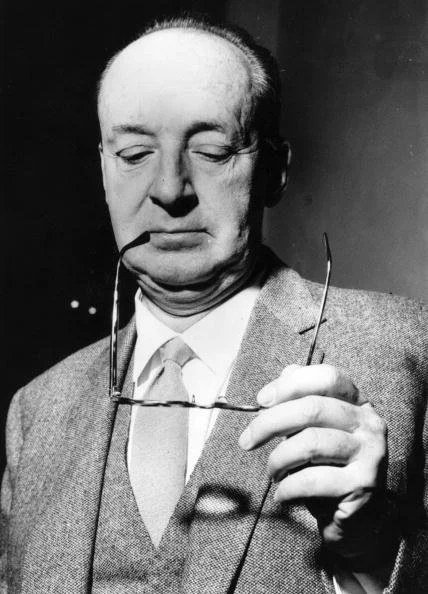
Nabokov: great writer, bad speaker?
My clients are, without exception, intelligent and successful professionals, most of them working in English as their second or additional language, and doing really well.
Their 'communication skills' are excellent…
As long as it's written English.
Their written communication is first-rate. You can't work at a high level in professions like law, medicine, finance, tech, cybersecurity, and academia, unless you can express your thoughts clearly and cogently using the written word.
Even writing clear digestible emails is a skill that most of us need to master in order to get on in our careers.
I still have a weakness for long dense emails - do you? You probably don't! Read my old pal Graham Allcott's recent blog on how to write better emails for some tips on writing even better emails.
But these same highly capable, articulate writers then struggle when they're called upon to speak — to give a report to a meeting, make a presentation, or take a phone call from a client.
Not because they lack ideas. Not because their English is poor.
Because speaking is very different to writing. They are not the same skill.
Obvious, right?
Maybe it's obvious if you're reading a public speaking and accent reduction coach's blog! Sitting there thinking 'yep I'm a confident writer, I always get great feedback', and now you've reached a point in your career where the only part of your job you find really hard, the only part you don't look forward to, the only part where you feel like you really need to improve, is when you have to speak.
But even then, my experience is that most professional people treat words, and language, as something that lives on a page. Or a screen. This is something I see constantly in my coaching work.
Good writing and good speaking overlap, but they are not the same skill. Here are six key differences that matter if you want to sound clear, confident, and natural when you speak.

Reading or listening?: ‘so, what is imposter syndrome? Imposter syndrome is… oh you read it already… ok, moving on…’
1. Readers are not the same as listeners.
Do you sit through a lot of presentations that consist of a presenter putting up slides full of text, and then reading out the text to you?
Meanwhile, you’ve already read the whole thing. And now you’re waiting and wondering how long til coffee break…
A reader has a lot of control. She can reread a sentence, pause halfway through, or skim ahead. A listener can’t.
Spoken language is experienced in real time, and if an idea doesn’t land immediately, it’s gone.
When you listen, you have almost no control: the speaker is the one who’s in charge of the pace.
So speakers need to do the work, to deliver their thoughts for someone who is listening once, not studying meticulously. That shift alone can affect not just the way you sound, when you speak, but also what you say.
2. Writing tolerates density. Speaking needs space.
Written language tends to be more formal and sophisticated than speech; long introductions, layered clauses, and abstract phrasing are fine on the page, but OUT LOUD, this kind of dense language demands too much processing - especially if the speaker speaks quickly, or mumbles, or has a monotonous voice.
Look again at the quotes that I started the article with.
Samuel Johnson was writing to be read - the quote is a vivid but densely detailed image, and it’s LONG - lots of words.
It works better on the page than out loud.
The Nabokov quote was written to be read too, but try it out loud; it sounds like normal speech, right?
That's not just because there a fewer, simpler words. It's to do with the rhythm: it's one sentence, separated into three 'thoughts':
"I think like a genius,/
I write like a distinguished author,/
and I speak like a child."
Listeners have to work, in real time, to process meaning, so good speakers will tend to break down a single sentence like the above (that is grammatically 'complete') into two or three 'thoughts' — not because the speaker is dumbing things down, but because they are respecting the needs of the listener.
In writing, pauses are invisible. Punctuation is not the same: it’s designed for your eye, so that you can figure out which collection of squiggles links to which. When you read silently, you don't to literally pause your reading at a full stop.
In speaking, pauses are structural: the pauses are for your ear, and they go in places you wouldn't think to put any punctuation, when you're writing.
Many professionals rush because they associate pauses with hesitation, uncertainty. Or they worry that somebody will interrupt.
In reality, pauses are one of the clearest signals of confidence in spoken English, because they make listeners feel confident that they understand - they can pick up on the VALUE of what's being said.
3. Writing hides uncertainty. Speaking reveals it.
On the page, any hesitation on the part of the writer, any careful consideration, or indecision, is invisible.
This document you've sweated over for days and re-edited constantly, looks and feels like a continuous flow of cogent ideas.
Impressive, huh?
In speech, hesitancy or indecision shows immediately — through rushing, filler words, flat intonation.
This is especially common for non-native speakers seeking the correct word in English, but native speakers struggle with it too.
A recent client said to me, 'at school we were taught to speak in complete sentences'.
I see what this client's teachers were trying to achieve, but…
The above is not a complete sentence. But it's the kind of thing people actually say.
I say to clients, we speak in thoughts. Not 'sentences'.
'Ok.'
That one word can be a complete thought.
Is it a sentence? Technically, perhaps.
Would you get a good mark for writing 'Ok.' in a school essay?
When we learn to read and write, we tend to learn that 'sentences' are neat grammatical equations with a beginning, middle and an end, a subject and an object, and usually longer and more complicated than 'the cat sat on the mat'.
And then that's what we think good speaking is: good writing, but out loud.
When we try to speak in complete sentences, we get tongue-tied and um, hesitant, aaaas… we… try to think… of how this 'sentence' is going to end… in a way that's grammatically… correct…. And… er… eloquent.
When people feel pressure to “get it right”, they strive for that sense of correctness and order that written forms of English give us as readers.
Good speakers don’t eliminate uncertainty; they manage it.
They pause, use emphasis deliberately, and allow themselves to think while speaking, because they remember that listeners need time to think too.
4. Writing is finished. Speaking is interactive.
Once something is written, it doesn’t tend to change.
Speaking is different. And much more forgiving!
A good speaker who has her focus on doing the listener's work constantly adjusts based on what she sees and hears from the audience.
Are people following? Are they engaged? Are they confused?
This is why memorised scripts often fail.
They lock the speaker into fixed wording and remove flexibility. If the audience reacts differently than expected, the speaker has nowhere to go.
The American self-help guru Dale Carnegie said,
There are always three speeches, for every one you actually gave: The one you practiced, the one you gave, and the one you wish you gave'.
When you read from a script, or memorise it, you're delivering the speech you wrote last night. You're not actually speaking to the listeners who are right here, right now.
Strong speakers hold structure, not scripts. They know the direction of their message, but they allow the wording to adapt in the moment.
And unless you're a really talented scriptwriter, you're not going to make your scripted words sound like real, spontaneous, authentic speech.
Which leads me to my next point…
5. Good writing sounds polished. Good speaking sounds human.
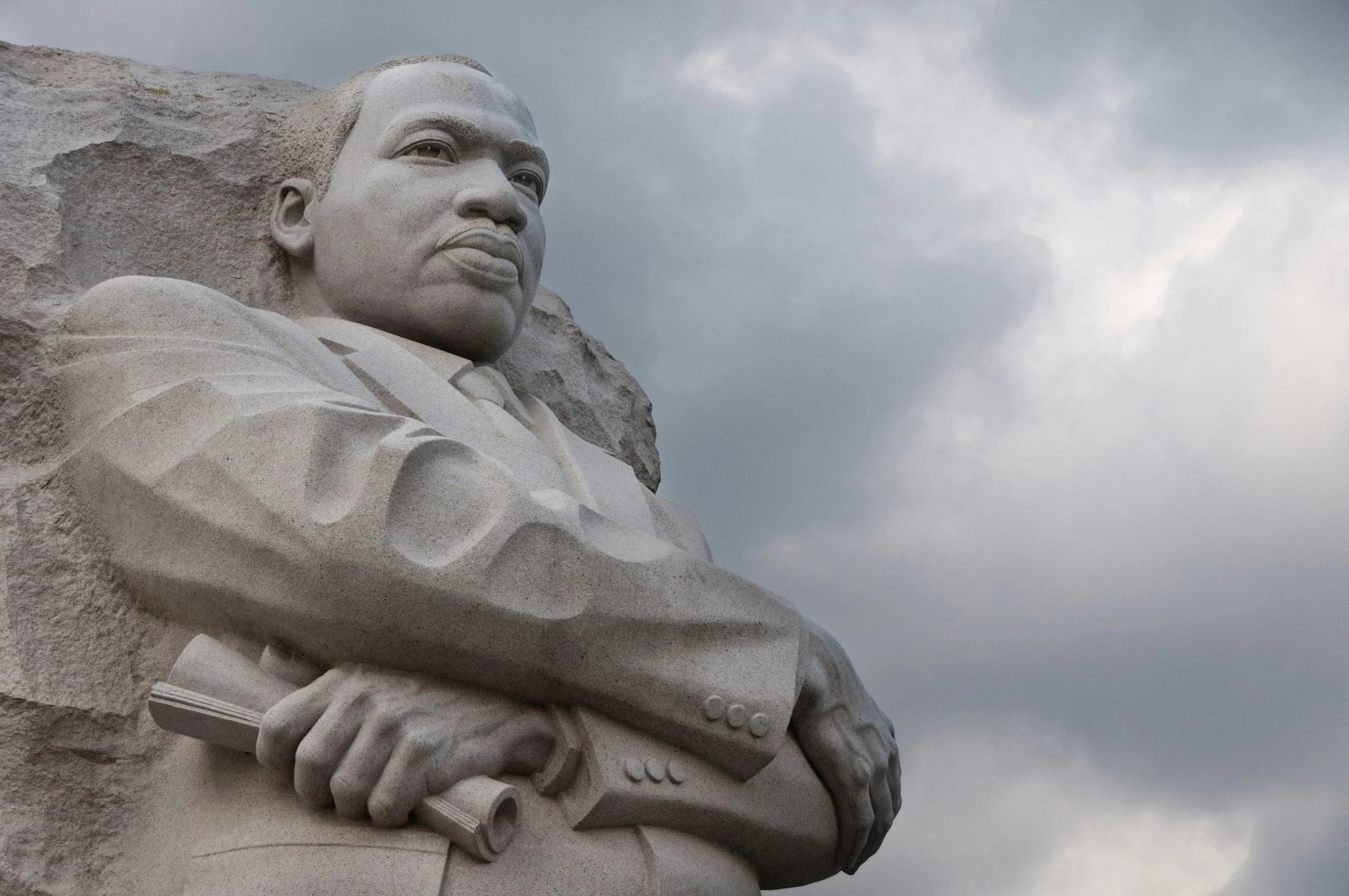
I have a dream: you remember it because MLK kept repeating it. If it was a written speech, you’d think ‘this needs editing’
Writing usually removes repetition. Speaking relies on it.
In his famous speech, how many times does Martin Luther King Jr. say, 'I have a dream'?
In spoken English, repetition reinforces meaning, signals structure, and keeps listeners oriented.
Phrases like “the key point here is this.” or “what this means in practice is…” may seem unnecessary on the page, but they are valuable when listening.
Spoken language is also more personal and direct.
Even people with large vocabularies tend to use simpler verbs, fewer abstract nouns, and less convoluted syntax when they speak off the cuff.
Many professionals try to sound “professional” by speaking as if they are writing. The result is often stiff, distant, and hard to connect with.
Sounding 'natural' when you speak is not a gift or a personality trait. It’s a technical skill — a choice.
It's easier to make that choice when we start to let go of thinking of speaking as 'writing but out loud', and remember to think about how words sound, not just what they mean.
6. Writing prioritises correctness. Speaking prioritises impact.
To put point 3 another way: in writing, correctness matters. In speaking, impact matters more.
A grammatically perfect sentence can still fail if the listener doesn’t fully hear it, or understand it, remember it, or feel engaged by it.
The great strength of speaking is not flawless perfection — it's to connect on a human level.
This is why some speakers with “imperfect” English are more effective than highly accurate ones. They organise ideas clearly, emphasise what matters, and their limited vocabulary often means they get to the point quicker.
Good speaking is not writing out loud. It’s a separate system, with its own rules.
Why it matters to treat words as SOUNDS
Many capable professionals hold themselves back because they judge their speaking by writing standards.
They over-prepare, over-edit, and over-control — and end up sounding less confident, not more.
The good news is that once you understand how speaking works - or rather, remember how it works, because there was a time when you were young, before you learned to write fluently, when you were a much more effective speaker than a writer! - improvement is usually fast.
Small changes in focus, pacing, and emphasis often make an immediate difference.
If you’re curious to experience this in practice, I offer a free 1-hour taster session. It’s a practical session, not a sales pitch, and it gives you direct feedback on how your spoken English comes across — and what to work on.
Good writing is a valuable skill. But good speaking is its own discipline. Learning the difference is often the turning point in your career as a communicator.
Thanks for reading, and have a fabulous holiday season. Merry Christmas and a happy New Year!
Frequently Asked Questions
Is good writing the same skill as good speaking?
No. While they support each other, they are different skills with different rules. Writing is designed for readers who control the pace. Speaking is designed for listeners who process information in real time. This is why sentences that work well on the page often feel awkward or unclear when spoken aloud.
Why do I sound less confident when I read something I’ve written?
Because written language is denser and more controlled than spoken language. When you read aloud, you’re often trying to deliver sentences that weren’t designed for listening. This can lead to rushing, flat intonation, or hesitation — even if the content itself is strong.
And remember, reading a script and making it sound like real speech: that’s what actors do. You don’t need to act. You need to connect with listeners.
Should I avoid scripts when speaking?
Scripts aren’t inherently bad, but relying on them too closely often reduces clarity and flexibility. Confident speakers work with a structure rather than exact wording. This allows them to adapt to their audience and sound more ‘authentic’ while staying on message.
Is this mainly a problem for non-native English speakers?
No. Native speakers struggle with this just as much. Non-native speakers may notice it sooner because they are more conscious of accuracy, but the underlying issue — applying writing rules to speech — affects professionals at all levels.
How can I make my spoken English sound more natural?
Careful of that word ‘natural’! Good speaking is entirely deliberate. Focus less on correctness and more on emphasis, and pacing. Shorter sentences, deliberate pauses, and simple phrasing usually make a bigger difference than expanding vocabulary or perfecting grammar.
Can confidence in speaking really improve without memorising better phrases?
Yes. Confidence comes from control, not from having the “right” sentence prepared. When you understand how spoken English works, you can think and speak at the same time more comfortably — which reduces anxiety and improves clarity.
What happens in my free 1-hour taster session?
It’s a practical coaching session focused on how your spoken English comes across in real situations. You’ll get clear feedback, simple adjustments to try immediately, and a better understanding of the difference between written and spoken delivery. There’s no pressure to continue — it’s designed to be genuinely useful on its own.
Who is this coaching most useful for?
Professionals who speak English regularly at work — in meetings, presentations, or client conversations — and feel that they sound less confident or clear than they know they are. This includes both native and non-native speakers.